Simulations improve understanding of how floating structures respond to ocean conditions
by Mariah Rosales
Understanding how floating structures behave in ocean environments is essential for the design and safety of offshore and coastal systems. In a recent study, researchers used advanced computer simulations to examine how waves, currents, and mooring systems influence the motion of floating structures under a range of conditions.
Published in Applied Ocean Research, the study focused on the behavior of multiple floating bodies connected by mooring lines. Using computational fluid dynamics, the research team modeled how environmental forces affect both individual structures and their interactions with one another. Capturing these dynamics presents a significant challenge due to the nonlinear behavior of fluid motion and structural response.
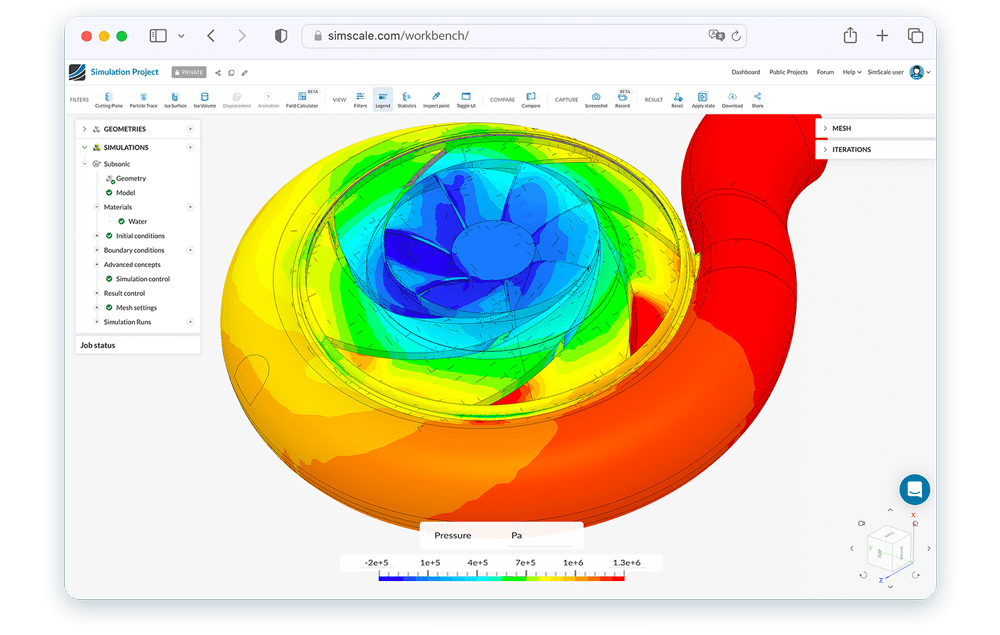 To address this complexity, the researchers conducted large-scale simulations that tested different structural configurations and wave environments. These simulations required resolving fluid flow, body motion, and mooring dynamics simultaneously over extended periods of simulated time.
The results provide insight into how floating structures respond to realistic ocean conditions, particularly in scenarios involving multiple interacting bodies. This information can help inform the design and analysis of offshore platforms, renewable energy systems, and other marine infrastructure.
Simulation-based studies such as this allow researchers to explore scenarios that are difficult or costly to reproduce through physical experiments alone. The work highlights the role of computational modeling in advancing engineering research related to marine and coastal environments.
The computational demands of the study were supported by high-performance computing resources at the University of New Mexico’s Center for Advanced Research Computing (CARC). These systems enabled the researchers to perform detailed simulations that would be difficult to achieve using smaller-scale computational approaches.